Evidence-Based AI Medical Scribe
The AI medical scribe with built-in clinical reasoning
Most ambient scribes only transcribe. EvidenceMD's AI scribe pairs documentation with clinical decision support — drafting structured, evidence-based notes while flagging red flags and surfacing peer-reviewed citations during the encounter. It works on web, iOS, Android and as a Chrome extension, and shares the same reasoning engine behind the EvidenceMD medical AI API.
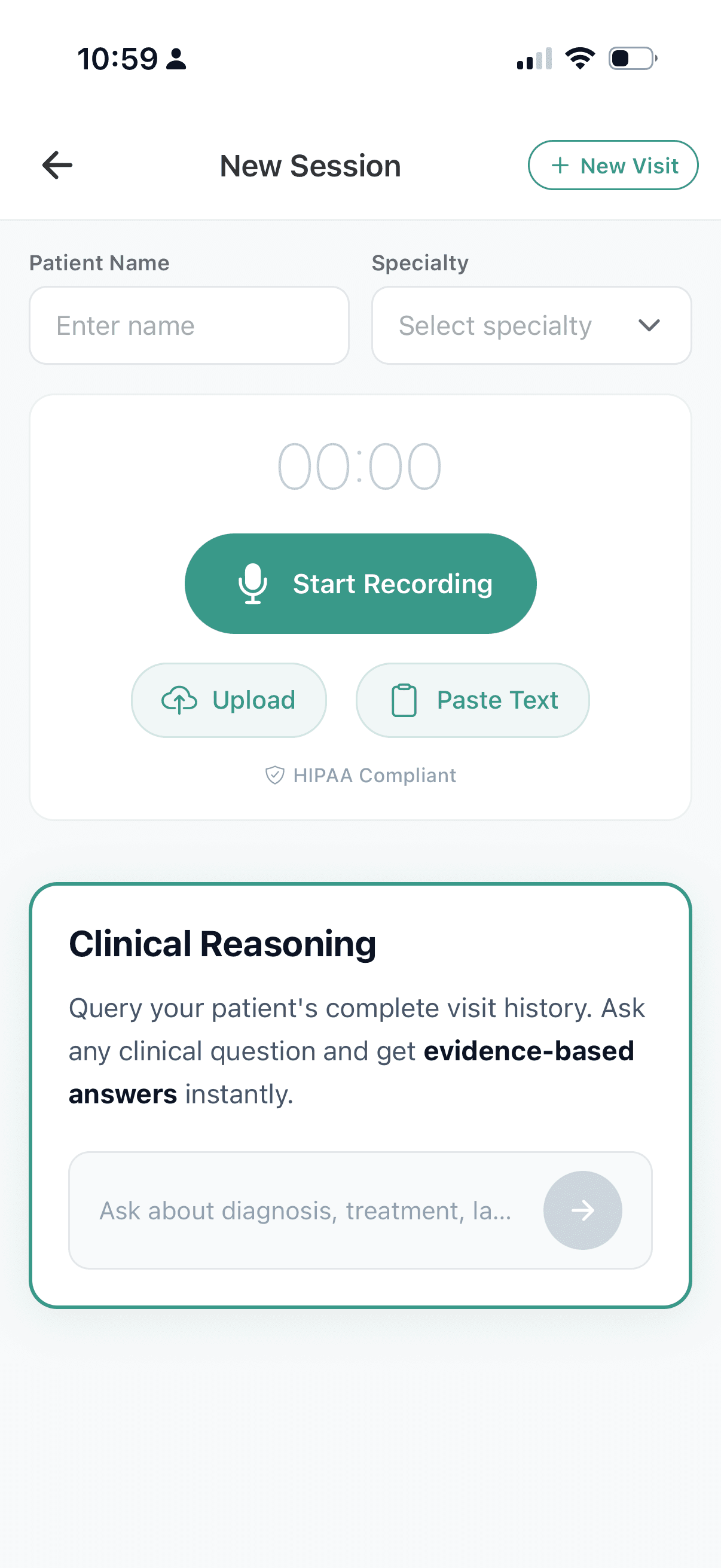
All patient data shown is synthetic demo data.
Evidence-Based AI Scribe · CDS Integrated
The only AI scribe with clinical reasoning.
EvidenceMD is the first platform to integrate clinical decision support with AI medical scribe documentation. The evidence-based AI scribe doesn't just transcribe — it reasons, flags red flags, and ensures physicians don't miss critical diagnoses.
CDS + AI Scribe Integrated
Clinical decision support and evidence-based documentation unified in one workflow. Evidence-based suggestions surface during real-time documentation.
Red Flag Detection for Patient Safety
The AI scribe automatically flags critical findings, dangerous drug interactions, and overlooked diagnoses so physicians never miss a safety concern during patient encounters.
Evidence-Based Clinical Documentation
Every clinical note is grounded in peer-reviewed evidence from medical journals. ICD-10 and CPT codes suggested with clinical reasoning justification.
Ambient Real-Time AI Scribe
Listens to patient encounters and generates structured SOAP notes, discharge summaries, and referral letters in real time with evidence-based clinical reasoning.
Clinical Documentation Integrity
An AI scribe that supports clinical documentation integrity (CDI)
Clinical documentation integrity (CDI) means the record is accurate, complete, and specific enough to reflect the true clinical picture. Ambient scribes that only transcribe can leave gaps between what was said, what was reasoned, and what was documented. Because EvidenceMD's scribe runs on the same evidence-based reasoning engine as its clinical decision support, the documented assessment, differential, and plan come from one source — keeping the note aligned with the clinical logic behind it.
- •Specificity and completeness — the note captures the reasoning, findings, and severity that support accurate coding and quality reporting, reducing downstream documentation queries.
- •One source of truth — assessment, differential diagnosis, and plan are generated from the same encounter, so the documented reasoning matches the clinical decision-making.
- •Verifiable evidence — peer-reviewed citations sit alongside the note, so the record shows not just what was decided but the evidence behind it.
CDI teams and clinicians can pair EvidenceMD with existing workflows, and developers can build the same reasoning into documentation pipelines through the EvidenceMD medical AI API. EvidenceMD supports, and does not replace, professional CDI review and clinician judgment.
Frequently asked questions
How EvidenceMD's AI medical scribe works and how it differs from ambient transcription.
- What is an AI medical scribe?
- An AI medical scribe listens to a clinical encounter and automatically drafts structured documentation — such as SOAP notes — so clinicians spend less time typing and more time with patients. EvidenceMD goes further than a transcription-only scribe: it pairs documentation with clinical reasoning, flagging red flags and surfacing peer-reviewed citations during the visit.
- How is EvidenceMD's AI scribe different from other ambient scribes?
- Most ambient scribes only transcribe and summarize. EvidenceMD's AI scribe shares the same evidence-based reasoning engine as its clinical decision support, so it drafts evidence-based notes, highlights potential red flags, and includes peer-reviewed citations — turning documentation into a clinical safety net rather than a passive transcript.
- What platforms does the EvidenceMD AI scribe work on?
- The EvidenceMD AI medical scribe works on the web, on iOS via the App Store, on Android via Google Play, and as a Chrome extension, so you can document encounters across your existing workflow.
- Does the AI scribe cite sources in its notes?
- Yes. Because it runs on EvidenceMD's evidence-based reasoning engine, the scribe can surface peer-reviewed citations and clinical guidance alongside the documentation it drafts, so recommendations are verifiable.
- Is EvidenceMD's AI scribe HIPAA compliant?
- EvidenceMD is built with a HIPAA-aligned security posture: data is encrypted in transit and at rest, and a Business Associate Agreement (BAA) is available for eligible plans.
- How does EvidenceMD's AI scribe support clinical documentation integrity (CDI)?
- Clinical documentation integrity (CDI) means the record is accurate, complete, and specific enough to reflect the true clinical picture. EvidenceMD's scribe runs on the same evidence-based reasoning engine as its clinical decision support, so the documented assessment, differential diagnosis, and plan are generated from the same encounter — keeping the note aligned with the clinical logic behind it and reducing gaps between what was reasoned and what was documented. Peer-reviewed citations sit alongside the note, so the record shows the evidence behind each decision. EvidenceMD supports, and does not replace, professional CDI review and clinician judgment.
- What is the difference between an ambient scribe and a CDI tool?
- An ambient scribe listens to the encounter and drafts documentation such as a SOAP note; a clinical documentation integrity (CDI) tool works to ensure that documentation is accurate, complete, and specific enough for coding, quality reporting, and care continuity. EvidenceMD bridges the two: it drafts the note like an ambient scribe, but because it also runs evidence-based clinical reasoning, the note captures the specificity, severity, and reasoning that support documentation integrity — from one source rather than a transcript plus a separate review step.